

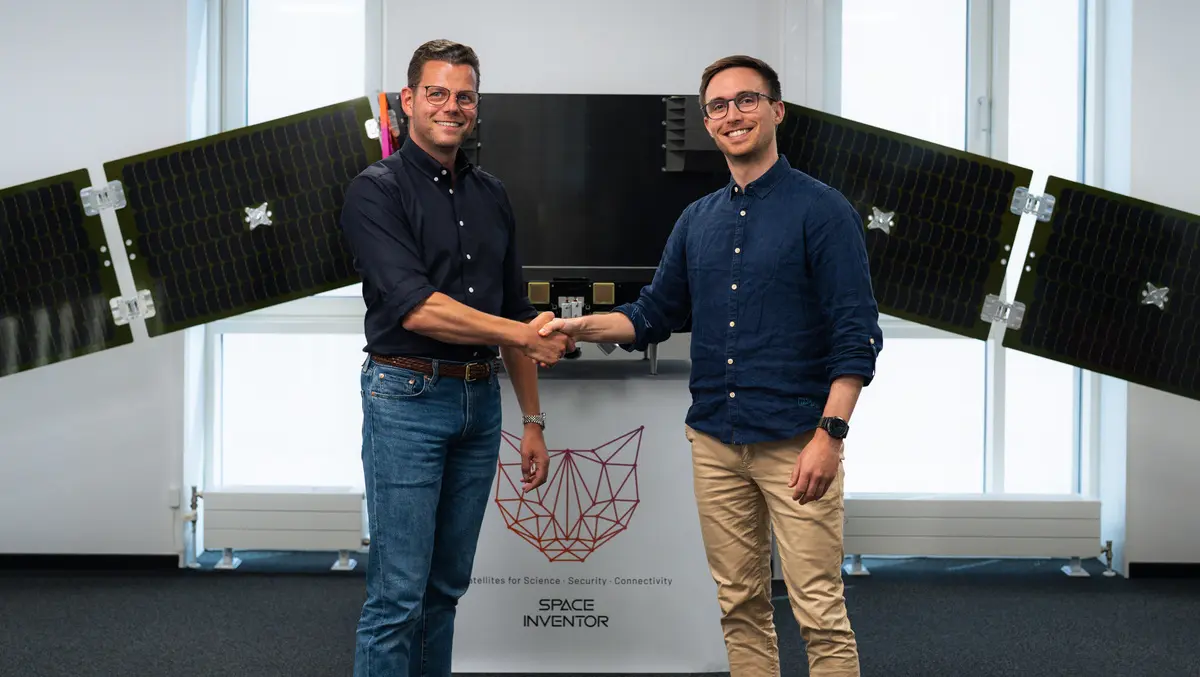
constellr picks Space Inventor for HiVE satellites
Wed, 26th Aug 2026.webp)
Space Inventor has been selected by constellr to build two satellite platforms for the next phase of the HiVE thermal Earth observation constellation, with launch planned for 2028.
The agreement brings together a Danish satellite platform manufacturer and a European thermal Earth observation company as constellr expands its HiVE programme to monitor absolute temperature from space.
Constellr uses thermal imaging to track temperature patterns and anomalies that may not be visible through optical or radar-based Earth observation systems. The HiVE constellation is intended for applications in security, infrastructure, climate resilience, maritime awareness, and food and water monitoring.
For Space Inventor, the deal adds to its work as a manufacturing partner for small satellite constellations in Europe. Its approach relies on modular satellite systems built from standardised components rather than a fully bespoke platform for each mission.
The two new platforms will support the next stage of HiVE, which constellr describes as a high-precision thermal intelligence system. Demand for detailed thermal data has been rising across public and commercial sectors seeking closer monitoring of physical assets, environmental conditions, and activity on the ground.
Platform design
Space Inventor said its spacecraft architecture is based on decentralised design, modularity, redundancy, and scalability. Those principles are intended to provide flexibility for payload integration while maintaining reliability for remote sensing missions.
The contract also reflects a broader trend in the European space sector towards smaller, repeatable satellite platforms that can be adapted for constellation deployment. Manufacturers have been seeking to cut development time and reduce mission risk by using established subsystems across multiple spacecraft instead of creating one-off designs.
Constellr's payloads are focused on land surface temperature measurement and broader thermal observation. The data can be used to identify heat signatures and changes in natural and built environments, adding another layer of information alongside imagery from conventional Earth observation satellites.
In sectors such as national security and maritime monitoring, thermal sensors can reveal activity that may not be obvious in visible imagery. In infrastructure and environmental monitoring, they can help detect unusual heat patterns, stress conditions, and other anomalies over time.
A brief comment from the companies framed the selection around payload performance and system integration.
"Our partnership with constellr perfectly aligns with Space Inventor's core strategy to advance Earth observation missions utilising our Flexible Modularity approach to system integration," said Jan Smolders, Chief Commercial Officer at Space Inventor.
"We're excited to join this Europe-based EO innovation initiative and are fully ready to help bring the objectives of the HiVE Next-Generation programme to life."
Constellr said the choice of spacecraft provider was shaped by the needs of its thermal sensors. It described the satellite bus as a key factor in ensuring the payload performs to specification once deployed in orbit.
"We needed a platform built around the payload, not the other way around. Space Inventor's system-level approach means our thermal sensors perform exactly as designed once they're in orbit," said Marius Bierdel, Co-Founder and VP Program Management at constellr.
European focus
The tie-up also underlines the push to build more of Europe's small satellite supply chain within the region. Both companies present the arrangement as part of a Europe-based Earth observation effort combining satellite manufacturing with thermal data services.
Space Inventor has worked on remote sensing missions for scientific and defence uses, according to the company. That background is likely to be relevant as Earth observation customers increasingly seek satellites that can serve both civilian monitoring and sovereign data requirements.
Constellr describes itself as a provider of thermal intelligence based on land surface temperature measurements from space. Its business model centres on supplying those observations as a service, giving customers access to data on temperature trends and anomalies across urban, environmental, economic, and strategic settings.
The latest contract suggests constellr is moving from early constellation development towards a larger operational network. By adding two more satellite platforms, it is seeking to extend the coverage and utility of thermal observation for users that want persistent temperature data from orbit.
For Space Inventor, winning the work offers another reference point in a market where constellation operators increasingly want suppliers that can manufacture multiple spacecraft using repeatable designs. The contract is a strategic next step in building its role as a European manufacturing base for small satellite constellations.