

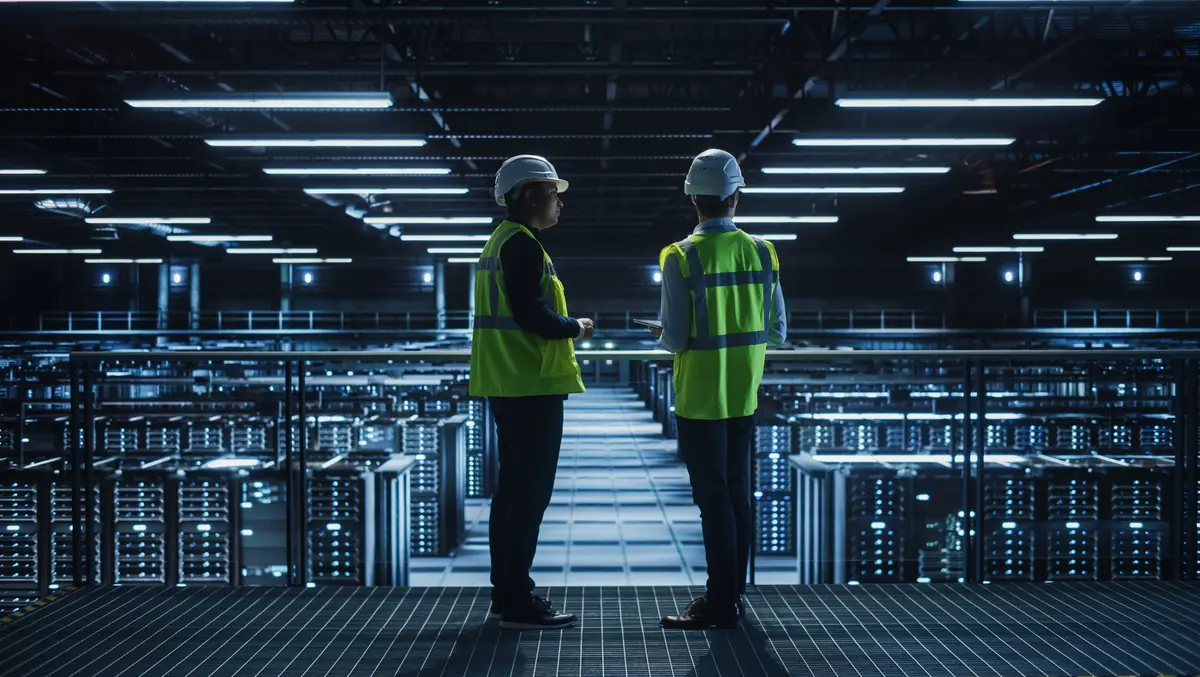

Power On has urged data centre developers to use heat recovery systems to supply nearby buildings with heating and hot water, arguing that the approach could support sustainability targets and planning applications in the UK.
The call comes as demand for data centres rises and scrutiny of their environmental impact intensifies, particularly over the large volumes of heat they discharge into the atmosphere. Power On, which focuses on heat networks and utility connections, says this waste heat can be redirected into district heating systems serving residential and commercial developments.
Heat reuse
District heating schemes distribute heat and hot water from a central source to multiple buildings through a shared network. In this model, that source would include captured thermal energy from data centres, supported by air-source and ground-source heat pumps.
Power On says the model delivers a dual environmental benefit: it reduces the amount of excess heat released from data centres while cutting the need to generate separate heat for homes, campuses and town-scale developments.
The company also points to operational benefits for data centre operators. Reusing waste heat can reduce reliance on conventional cooling systems, which may lower a facility's overall energy use.
There may also be a revenue opportunity. Data centres can be paid for heat exported into local networks, creating a potential commercial incentive alongside the environmental case.
Planning pressure
The case is being made against a backdrop of expanding digital infrastructure and growing pressure on developers to demonstrate lower-carbon designs. Data centres are energy-intensive assets, and facilities linked to artificial intelligence workloads have drawn particular attention because of their heavy electricity demand and heat output.
In the UK, heat recovery from data centres remains relatively uncommon, according to Power On. The company contrasts this with parts of Europe, where the use of waste heat in district heating systems is already more established.
Location is central to the proposition. Data centres are often built in urban areas with strong electricity supply, fibre connections, skilled labour and low-latency access. Heat networks also tend to work best in dense urban environments, especially high-rise residential districts and large mixed-use developments where multiple buildings can be connected efficiently.
That overlap suggests data centre projects and housing developments could be natural partners if planned together early. For developers, the implication is that heat infrastructure should be considered as part of wider urban planning rather than added later.
Industry view
Power On says this alignment could become more important as planning standards evolve. Developers face growing pressure to show how major schemes will meet environmental expectations, and heat reuse may become one way to strengthen that case.
Alex Randal outlined the company's position on the issue.
"With the number of data centres growing and climate change an ongoing and rising issue, data centres will be keen to enhance their CSR where possible and may need to do so soon under planning regulations. Having plans for heat recovery and transfer in place is likely to help to fast-track planning and will be good PR for data centres in what can sometimes be a difficult industry," said Alex Randal, Business Lead for Sustainable Heat at Power On.
Power On describes itself as a provider of multi-utility connections, including electricity, water, wastewater, fibre, heat and gas infrastructure. It says it has more than 20 years of experience and has worked on heat provision for high-rise residential and mixed-use developments, including sites with complex infrastructure requirements.
The wider issue for the sector is that heat, long treated as an unavoidable by-product of digital infrastructure, is being reconsidered as a usable resource. In cities where new housing and commercial space are being built close to data infrastructure, the economics of capturing that resource may become harder for developers and local authorities to ignore.
Power On's message to the market is that many urban locations already have the physical conditions for heat networks and data centres to operate side by side, with waste heat from one providing a practical energy source for the other.