

Finchetto launches Cardiff photonics manufacturing push
Thu, 22nd Oct 2026 (Today)
Finchetto has launched a ten-month programme to establish photonic integrated circuit manufacturing at Cardiff University.
The work focuses on thin-film lithium niobate technology for the company's optical packet switch.
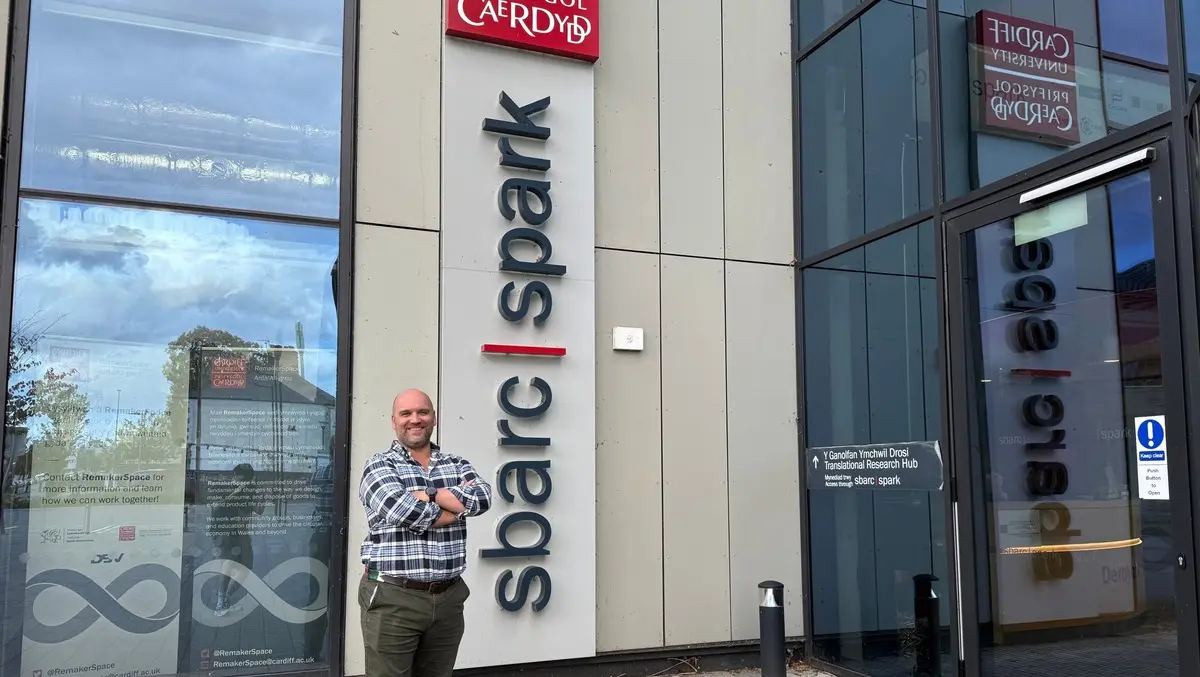
The Surrey- and Cardiff-based startup will develop a manufacturing process for photonic integrated circuits at Cardiff University's sbarc|spark innovation building, using cleanroom facilities at the Institute for Compound Semiconductors.
Funding includes a grant through the Investor Partnerships Programme and private investment from the Development Bank of Wales.
Finchetto is developing thin-film lithium niobate, or TFLN, photonic integrated circuits to carry its patented fully optical packet-switching design. The company says the switch is intended for artificial intelligence and data communications workloads, and claims it can cut latency by up to 700 times and power use by up to 20 times compared with conventional electro-optical network switches.
The programme marks a shift from system design to manufacturing, as interest in photonics grows in response to rising power demands from AI infrastructure. Optical technologies are also gaining attention in UK industrial policy, with photonics identified as a priority area for domestic capability in the government's AI hardware strategy.
Manufacturing push
Finchetto already has an office in Cardiff and an office and lab in Guildford, Surrey, and has continued hiring in the Welsh capital. The project adds process engineering work in Cardiff and ties the business more closely to the region's semiconductor and photonics base.
Jack Christopher, Senior Investment Executive at the Development Bank of Wales, said: "Wales has strong capabilities in compound semiconductors and photonics, which is why we're delighted to support Finchetto's work at Cardiff University. Bringing specialist process engineering to Cardiff will strengthen the region's competitiveness and deepen the growing cluster of photonics innovation."
The Development Bank of Wales is backing the programme alongside public funding. The project also gives Finchetto access to university facilities used for semiconductor research and development.
AI energy demand
The announcement comes amid growing concern over the energy footprint of AI systems and the data centres that run them. As computing demand rises, networking equipment is coming under greater scrutiny because it adds both power consumption and latency within large-scale systems.
Policymakers and companies have presented photonics as one way to cut those costs by replacing or reducing electronic conversion in communications hardware. Finchetto's approach centres on an optical packet switch rather than a conventional electro-optical design.
Industry and policy interest in the field has also grown. Earlier this year, the Council for Science and Technology said more than 60 per cent of the UK economy could depend directly on photonics by 2035, and that the sector could reach £50 billion in value while supporting up to 150,000 additional jobs.
That broader context helps explain the focus on domestic manufacturing as well as product design. Building photonics production capacity in the UK has become part of a wider push to reduce dependence on overseas supply chains in advanced hardware.
Mark Rushworth, Chief Executive Officer at Finchetto, said: "This programme takes our fully passive optical networking technology towards a manufacturable product while building on the UK's strong photonics manufacturing capabilities. Photonics is emerging as a pathway to radically more efficient AI and data communications; sovereign capacity will be crucial if the UK is to compete, and we're delighted to be contributing to that."