

LG begins mass-producing 5G telematics for European cars
Mon, 24th Aug 2026.webp)
LG Electronics has begun mass-producing its 5G smart telematics solution and has started deliveries to a premium European carmaker. It marks the product's first use in a production vehicle in Europe.
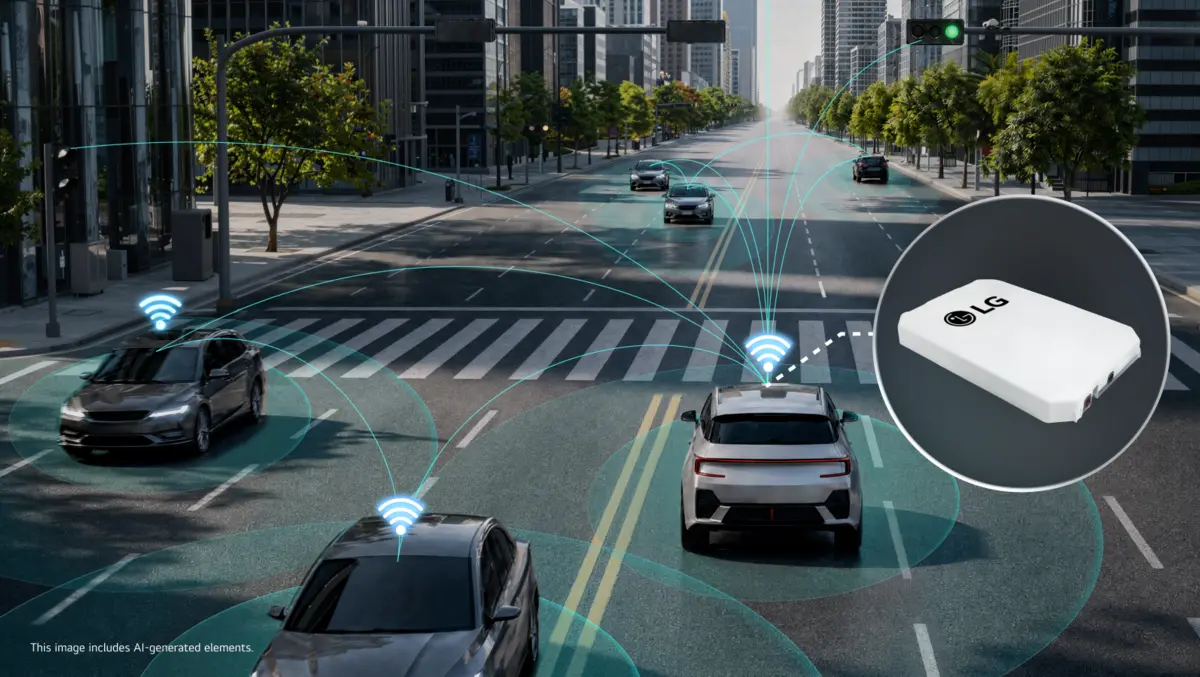
The system combines a communications module and up to 12 antennas in a single unit, replacing the more fragmented layout that typically separates the telematics control unit from an external roof antenna. The design is intended to reduce wiring, weight and cost while maintaining vehicle connectivity.
As cars have taken on a wider range of wireless functions, including satellite navigation, 5G, Wi-Fi and vehicle-to-everything communications, automakers have had to add more antennas. That has created packaging problems because conventional shark-fin roof housings can hold only a limited number, often forcing manufacturers to spread components around the vehicle.
Those constraints are more significant in electric vehicles, where extra weight can affect range and more complex wiring can raise manufacturing costs. LG's approach aims to reduce radio-frequency cabling by moving more communications hardware into a single integrated assembly.
Integrated design
The product is based on 5G Release 16 technology and uses an internal layout that can accommodate up to 12 antennas. It can be configured in different ways, with telematics and antenna boards either combined or separated, allowing it to be adapted for both new models and existing vehicle platforms.
LG also built the system on its Automotive Telematics Platform, a software base developed over more than a decade. The platform allows the same core software to be used across different applications, with changes limited mainly to chipset-specific interfaces.
That software structure is designed to improve reuse and reduce reliance on a single communications chip supplier. In the car industry, where supply chain disruption has repeatedly affected production schedules, the ability to support multiple chipsets has become an important selling point for component makers.
Connectivity demand
The move comes as automakers place greater emphasis on software-led vehicle architecture. Connected cars increasingly rely on continuous data links for remote software updates, networked safety features and the transfer of larger volumes of data tied to advanced driver-assistance and automated-driving functions.
Telematics suppliers have therefore been under pressure to deliver systems that fit into tighter vehicle packaging while handling more communications standards at once. By integrating antennas and communications electronics in one unit, LG is seeking a larger role in that shift.
According to LG, testing in real vehicles showed the system could maintain data transmission and reception in high-temperature conditions. Heat management is critical in automotive electronics because thermal performance can affect reliability, especially when multiple radio systems are housed in a more compact space.
LG said mechanical design, internal structure and metal placement all play a part in thermal dissipation and radio performance. It linked the development to experience built up in mobile communications and antenna design before expanding into vehicle systems.
Automotive push
LG has been expanding its automotive components business for several years as it looks beyond consumer electronics for growth. Telematics has been one area where it has claimed a leading position, and the latest product underscores its effort to move from supplying standalone components to offering a more integrated communications platform for vehicles.
The company presented the product as part of the transition to software-defined vehicles, where electronic architecture is consolidated and software updates play a larger role throughout a car's life. In that model, communications hardware becomes central to functions such as over-the-air updates, vehicle-to-everything links and the transfer of data used in automated-driving systems.
For European carmakers, adopting integrated telematics systems may also reflect broader pressure to simplify vehicle design while adding more connected features. Premium brands have been among the earliest adopters of advanced in-car software and connectivity services, making them a testing ground for new hardware approaches.
"Our smart telematics solution goes beyond hardware integration to redefine the underlying architecture of vehicle communications," said Eun Seok-hyun, President of the LG Vehicle Solution Company. "Leveraging its accumulated expertise in communications technologies and software, LG will continue to deliver integrated telematics solutions optimized for the SDV era."