

Micro:bit foundation urges children to question AI
Mon, 26th Oct 2026 (Today)
The Micro:bit Educational Foundation has called for renewed action to help children understand and question artificial intelligence, as it marks 10 years since the BBC micro:bit was launched in UK schools.
It said children need more than familiarity with AI tools. They also need strong foundations in computing, data and AI literacy, alongside critical thinking and problem-solving skills. The foundation is urging industry and education leaders to work together as it aims to reach 100 million young people by 2028.
Over the past decade, it has helped 73.5 million young people in more than 85 countries develop digital skills. The micro:bit device was first distributed free to UK schools in 2016, when up to one million devices were given to Year 7 pupils, or their equivalent. Almost 700,000 more were provided to UK primary schools in 2023 and 2024.
Gareth Stockdale, Chief Executive Officer of the Micro:bit Educational Foundation, linked the anniversary to wider changes in education and work as AI systems become more common.
"AI is changing the world children are growing up in, but simply teaching them how to use today's tools isn't enough. The tools they use today may be obsolete by the time they enter the workplace. We need to give children strong foundations in computing, data and AI literacy, alongside the critical thinking, creativity and problem-solving skills that will allow them to keep learning and adapting as technology changes.
"Ten years ago, 29 partners came together to put the first micro:bits into the hands of children across the UK. As we look to the next decade, that same spirit of collaboration will be vital if we are to give every child the opportunity to shape their digital future," Stockdale said.
Classroom use
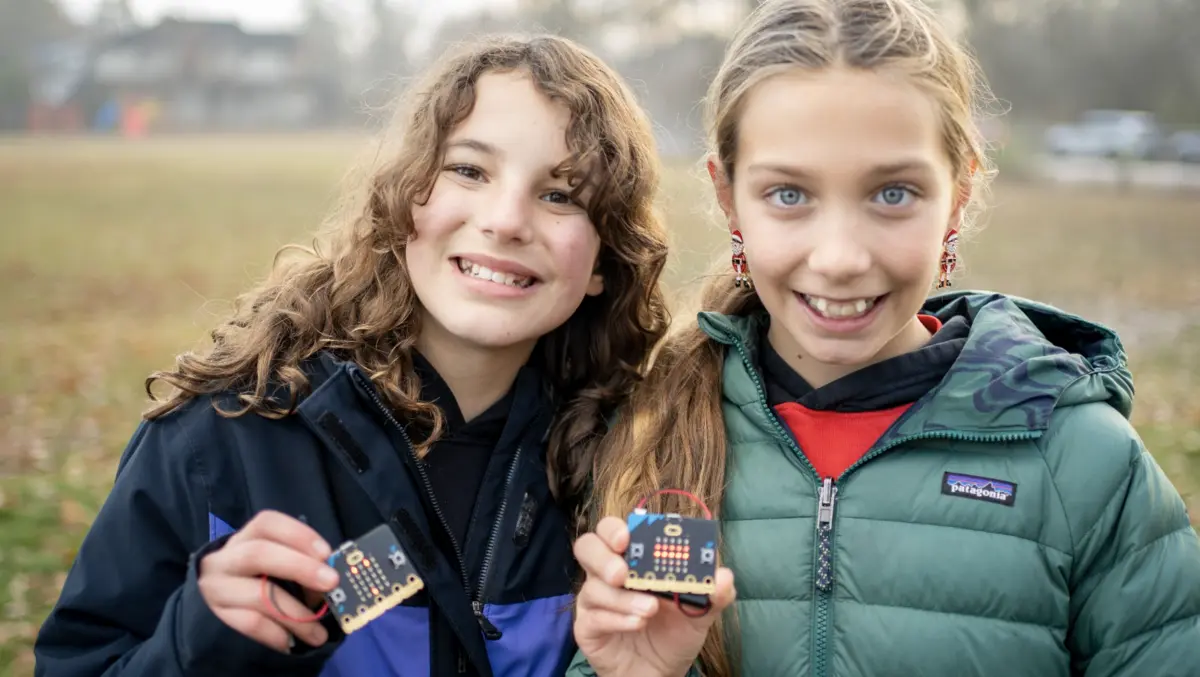
The micro:bit was originally brought together by the BBC to address the digital skills gap and introduce children to coding and physical computing. Since then, schools have used the device in projects linked to issues including climate change, road safety and wellbeing.
The foundation cited examples including primary pupils in Fife programming digital pets, then using lessons from that exercise to create a class charter. In London, Year 6 pupils built intelligent fans that responded automatically to rising temperatures.
Its work has expanded from computing into AI and data literacy as technology has changed. It continues to focus on project-based learning, in which children apply technical skills to practical tasks.
One of the pupils involved in the original 2016 rollout was Nishka Mathur, now studying Mechanical Engineering at Imperial College London. Since receiving a micro:bit, she has delivered coding workshops in schools in India and London and received The Diana Award for supporting children from disadvantaged backgrounds and helping reduce the gender gap in STEM.
"A lot of coding is being taken over by AI, but it's still very important for students to understand where it comes from. I almost think it's more important than ever because it really helps schoolchildren understand logic and therefore have better critical thinking when it comes to coding," Mathur said.
Another participant in the first rollout, Femi Owolade-Coombes, later set up the South London Raspberry Jam with his mother, running autism- and Tourette's-friendly coding events in South East London. He also worked with the foundation and CAFFE to donate 100 micro:bits to young people in Bangladesh.
Partner network
The foundation has worked with partners including Arm, the BBC, the British Council, the IET, Lancaster University, Microsoft, Nominet and UNICEF, with support from Google.org and Nordic Semiconductor. Those partnerships have helped expand access to digital education both in the UK and overseas.
According to the British Council, its joint work with micro:bit has reached more than 15 countries, trained more than 23,000 teachers and engaged an estimated 2 million children in more than 5,500 schools.
Charlotte Eaton, Chief People Officer at Arm, said: "What makes Arm's relationship with micro:bit so special is that our people have been part of it from the very beginning, from helping design the original BBC micro:bit board to the many colleagues who have shared their engineering expertise and enthusiasm over the decade since. At the heart of it all is a shared belief in giving young people the confidence to experiment with technology, understand how it works and imagine what they might create with it.
"Ten years on, that belief matters more than ever. As AI rapidly changes what's possible, curiosity, confidence and the ability to keep learning will empower the next generation not just to use technology, but to build what comes next. I'm incredibly proud of what we've achieved together, and of Arm's continued commitment to helping every child create their best digital future."
Stockdale said the physical nature of the device remains important as AI becomes a bigger part of education.
"The micro:bit connects computing to the physical world. Through project-based learning, young people experience technology as something they can shape and use to solve real problems, building technical knowledge and creative confidence together.
"The significance of AI makes this approach more important than ever. We will continue to support educators and learners through physical, creative and inclusive digital learning experiences, helping children build the foundations they need to thrive in an AI world," he said.