

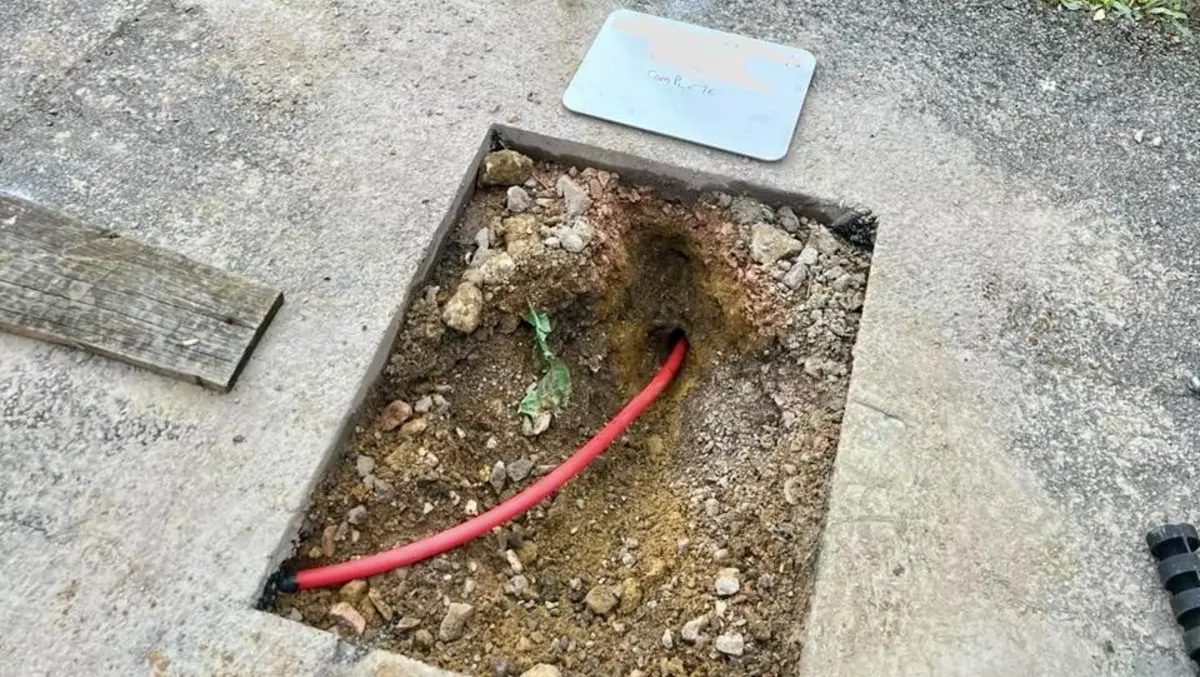

Openreach is trialling a new trenchless drilling system, MicroBORE, as part of its plan to accelerate the rollout of fibre broadband across the United Kingdom. The compact robotic system, originally developed with space exploration in mind, has been adapted to help deliver fibre-to-the-premise (FTTP) connections while reducing disruption and cost.
Technology origins
MicroBORE is the result of a five-year collaboration involving BT Group, Synthotech, and the University of Surrey. The technology, initially designed for lunar and Martian exploration, has been repurposed to install fibre underground with minimal surface disturbance. By boring narrow channels beneath pavements and driveways, the system allows fibre cables to be laid from main ducts to residential addresses without extensive open trenching.
Deployment benefits
This trenchless approach addresses one of the major challenges of fibre deployment - the cost and disruption caused by traditional digging. In dense urban areas and historic sites, where road closures and complex underground utilities add further complications, MicroBORE can operate between small access points, threading cables underground without large-scale excavation.
The technology also offers potential savings in road restoration and traffic management, as well as reducing carbon emissions associated with construction. Openreach is investing GBP £15bn in the Full Fibre broadband network, aiming to reach 25 million premises by December 2026, with a longer-term goal to connect up to 30 million premises by the decade's end.
Operational trials
Early testing at BT's research centre in Suffolk has confirmed the operational viability of MicroBORE. Openreach is now evaluating broader deployment of the system as part of its national rollout of full-fibre broadband.
"Through our partnership with Synthotech, we're taking cutting-edge engineering and applying it to one of the UK's biggest infrastructure challenges. The MicroBORE could be a game-changer for Openreach by enabling faster, greener, and less disruptive fibre installations that benefit customers and communities nationwide," said Violeta Novakovic, BT Research Manager, BT Group
Urban focus
Urban deployment of new infrastructure is often hampered by the need for extensive roadworks and disruption to traffic. MicroBORE's ability to bore beneath roads, streets, and complex utility networks makes it a practical option for cities and towns with limited available space for above-ground works. The system is also seen as environmentally favourable, with reduced land disturbance and emissions.
For areas without existing duct infrastructure, the civil engineering demands are high. MicroBORE aims to address this by speeding up fibre rollouts and lowering costs, which could help Openreach achieve its premises connection targets within planned timelines and budgets.
Broader applications
The technology may have future uses beyond fibre deployment. Trenchless, low-impact drilling is relevant to other sectors, such as electric vehicle charging and utility connections, where traditional trenching remains a barrier to faster expansion.
Synthotech, based in North Yorkshire, has a background in robotic and AI-enabled pipeline maintenance tools. Its work with trenchless solutions has enabled the adaptation of space-derived technology for national infrastructure projects.
"The new drilling technology will significantly reduce the cost and accelerate the execution of key civil engineering tasks. This is a hugely exciting application of advanced robotics that will completely transform how underground fibre connectivity is managed and delivered," said Simon Langdale, Engineering Director, Synthotech.