

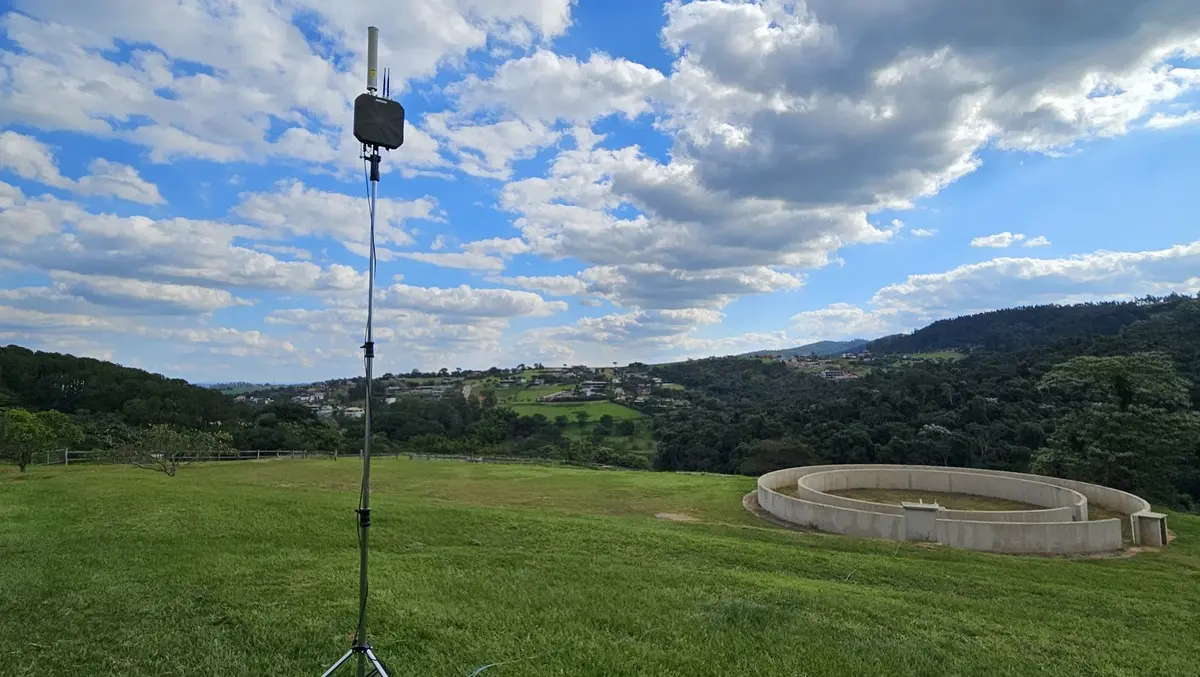
R2 Wireless & Centinus test integrated counter-drone system
Tue, 28th Apr 2026.webp)
R2 Wireless and Centinus have launched an integrated counter-unmanned aircraft system offering now being evaluated in the US Navy's ONR WaveBreaker programme.
The system combines R2 Wireless's ODIN passive radio frequency sensing platform with Centinus's DOMINION autonomous drone operations software. The aim is to link RF detection and geolocation with airborne investigation and operator decision support in a single workflow.
The work has progressed to MACE 3 live demonstrations under the Navy programme, moving the joint system into a live testing environment rather than a laboratory setting.
Counter-UAS operators face a growing challenge from low-altitude, fast-moving drones that do not remain within a single sensing domain. The companies say such threats can use RF, GNSS, Wi-Fi, cellular networks and low-signature flight profiles, exposing weaknesses in systems that depend on separate sensors and manual handovers.
In the integrated setup, ODIN detects, classifies and geolocates emissions of interest. DOMINION then assigns airborne assets to investigate and verify activity, while combining inputs from third-party drones, sensors and command-and-control systems.
This creates a chain from detection to verification and response. In practice, operators receive a single operational picture while autonomous airborne assets maintain tracking across multiple sensors over time.
Defence focus
The initial focus is military use. The companies identified maritime approaches, expeditionary operations, choke points, forward operating environments, base and port security, and the protection of high-value assets as key areas.
These settings have become a focal point for defence technology suppliers as armed forces seek faster ways to identify small drones before they disappear from view or move close enough to pose an immediate threat. Passive sensing is also drawing interest because it does not require the system to emit signals while searching for activity.
R2 Wireless said its platform was built around passive spectrum sensing and situational awareness. It has raised more than USD $13 million to date and expanded from Israel into Europe and the United States.
Centinus positions itself as the provider of autonomy software that works across different hardware and control systems. That hardware-agnostic approach is designed to let users connect a range of third-party drones and sensors rather than rely on a single aircraft or supplier.
The companies also highlighted possible uses beyond defence, including public safety and critical infrastructure protection. Potential applications include perimeter monitoring, incident verification, and security for utilities, energy sites, transport hubs, logistics nodes and industrial facilities.
That broader potential reflects a wider pattern in the drone and counter-drone market, where tools first developed for military use are increasingly being adapted for security and civilian protection. The overlap is strongest where operators need to assess alerts quickly in crowded or contested environments.
In a statement, Onn Fenig outlined the significance of the Navy evaluation. "WaveBreaker has given us the opportunity to validate not just a sensor, but an operational workflow," said Onn Fenig, Chief Executive Officer, R2 Wireless. "The result is a capability that can passively detect and geolocate relevant activity, then rapidly cue autonomous aerial investigation and support real-time decision-making. That is where the real operational value lies."
Ben Cheatham said the autonomy layer is intended to reduce operator workload while maintaining visibility of a potential threat across different systems. "Centinus is the autonomy layer that turns detections into actionable understanding," said Ben Cheatham, Chief Executive Officer, Centinus. "By integrating across third-party drones, sensors, and C2 systems, we help operators verify activity faster, maintain custody across sensors and time, and respond with less manual burden. That has clear relevance in defense today, and strong potential in adjacent security environments."
The development points to a shift in counter-UAS procurement towards integrated systems rather than standalone tools, with the Navy trial serving as a live test of how passive detection and autonomous aerial response can work together.