

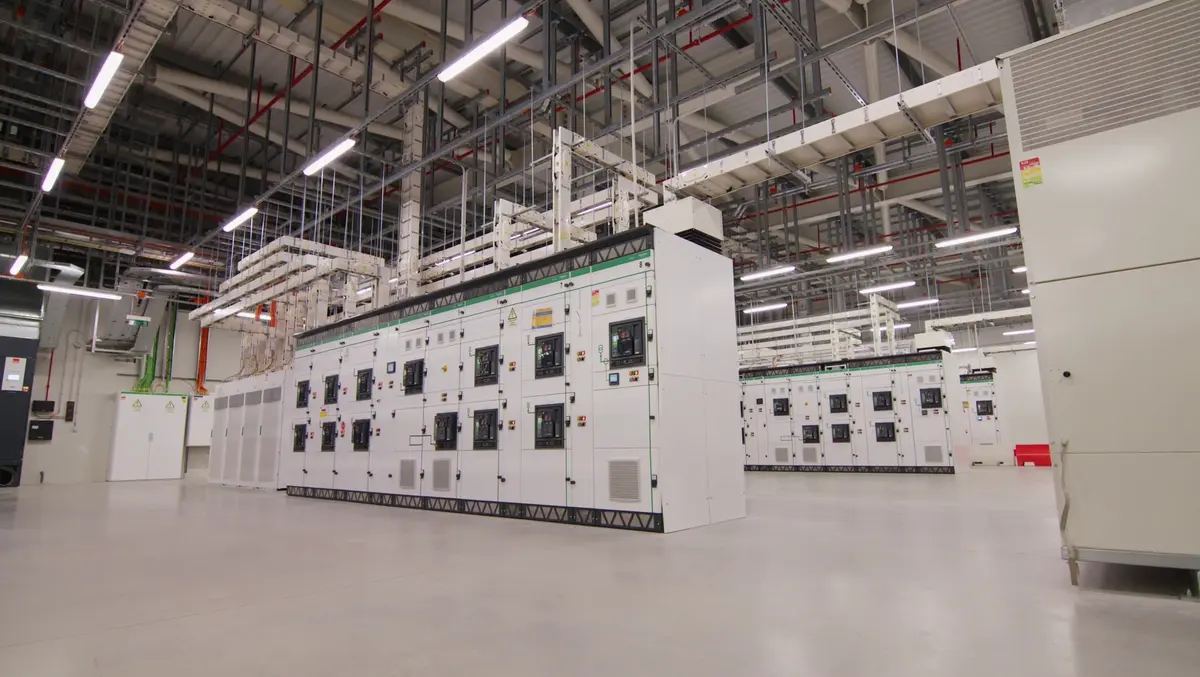
Schneider Electric unveils AI data centre blueprints
Mon, 1st Jun 2026.webp)
Schneider Electric will showcase new AI infrastructure products and data centre designs, including validated blueprints for NVIDIA systems.
The line-up includes designs for NVIDIA's GB300 NVL72 platform and Grace Blackwell Ultra architecture, along with digital twin software, 800VDC power architecture, modular data centre systems and liquid cooling equipment from Motivair by Schneider Electric.
The announcement reflects growing demand for data centre infrastructure built for artificial intelligence workloads, which place greater strain on power delivery, cooling and rack density than many conventional computing deployments. Schneider Electric described data centres as the core industrial asset behind the current expansion in AI spending.
Industry forecasts cited by Schneider Electric point to a sharp rise in investment. Morgan Stanley Research estimates that almost USD $3 trillion in AI-related infrastructure investment could move through the global economy by 2028, while Gartner expects worldwide AI spending to exceed USD $2.5 trillion in 2026.
Product focus
A central element of the portfolio is a set of validated AI factory blueprints linked to NVIDIA platforms. They are intended to support operators building large-scale environments for AI training and inference, where facility design and energy use are becoming more closely tied to the economics of deploying advanced models.
Schneider Electric also highlighted digital modelling tools built around NVIDIA Omniverse integration and its own digital twin technology. The tools are designed to help customers model, simulate and manage data centre environments across design, deployment and operations.
Among the hardware on show is the MCDU-70 from Motivair by Schneider Electric, which the company describes as a 2.5MW coolant distribution unit for data centres at gigawatt scale. It will also present hybrid cooling systems and high-density racks for AI workloads.
Power architecture is another focus. Schneider Electric will present its 800VDC design alongside modular data centre products and software, including EcoStruxure IT DCIM and EcoStruxure Foresight, as well as microgrid and data centre services.
Data centre strain
The expansion comes as operators contend with rising electricity demand and tighter constraints on grid access. AI systems are pushing facilities towards denser configurations, increasing the importance of liquid cooling, resilient power systems and software that can monitor and adjust performance across a site.
Schneider Electric said these pressures are reshaping the market for hyperscale, neocloud and colocation providers. Each group faces different trade-offs in how quickly it can bring new data centre capacity online, how it manages local utility relationships and how it controls energy costs.
Marc Garner, Global President, Cloud and Service Provider Segment, Schneider Electric, outlined the company's view in a prepared statement. "AI is fundamentally reshaping the future of digital infrastructure, creating new demands around power, cooling and resiliency, at unprecedented scale," Garner said.
He added: "At Datacloud Global Congress, we will demonstrate how collaboration across the ecosystem is enabling the next generation of AI factories and helping organizations build scalable, resilient and sustainable infrastructure, built for the AI era."
Broader strategy
The product range also shows how Schneider Electric is combining power equipment, thermal management and software in response to the changing profile of AI data centres. Rather than presenting discrete systems in isolation, it is offering an approach that covers the full lifecycle from planning and construction to operation and maintenance.
That strategy aligns with a broader industry move towards standardised designs and reference architectures as customers seek to reduce deployment risk. Validated layouts linked to specific compute platforms can help operators move faster when equipment, energy and cooling requirements are changing at the same time.
Schneider Electric also pointed to the growing role of digital twins in that process. For operators managing expensive, high-density AI facilities, software that can simulate heat, power and space requirements before hardware is installed is becoming more important for avoiding costly redesigns later.
The inclusion of Motivair's liquid cooling products underlines the significance of thermal management in the next phase of AI infrastructure build-out. As chip power rises and rack densities increase, air cooling alone is becoming less practical in many environments, particularly where operators want to maximise compute output within existing space and grid limits.
The latest offerings are aimed at customers across hyperscale, neocloud and high-density colocation markets, where demand for AI-ready capacity is driving changes in facility design and operations.