AI Data stories
Backed funds will help fill a later-stage financing gap for UK AI start-ups, after the Bank committed £180 million across six specialist vehicles.
The new devices target outages, power faults and timing errors that can disrupt AI servers as racks become denser and demand rises.
The milestone underscores surging demand for liquid-cooled AI data centre operations as Salute builds its customer base in under a year.
European firms are gaining more locally controlled AI capacity, as the Oslo site is set to house 5 MW of liquid-cooled compute under regional jurisdiction.
Enterprises could cut AI operating costs by 68% over three years by routing queries through the layer and filtering data before model ingestion.
Financial firms could cut manual data-matching work as Bloomberg's new interface gives AI agents governed access to more than 100 million securities.
The tie-up could help enterprise AI tools reach live data more securely, while Zetaris claims its cloud service may cut total cost of ownership by up to 67%.
The initial 20MW site near Casablanca will anchor a much larger 180MW AI campus built around Nvidia's latest server architecture.
Higher efficiency and the same quarter-brick footprint could ease heat and power constraints for operators packing more AI hardware into dense racks.
Its core appliance and vehicle businesses helped drive record nine-month operating profit to KRW 4.03 trillion, despite macroeconomic uncertainty.
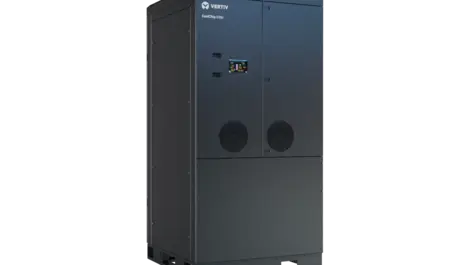
Operators can now pre-order a cooling unit that aims to reduce redesigns as GPU roadmaps shift and rack densities for AI servers keep rising.
Enterprises could get more dependable AI agents as Dell's update ties internal data to context, governance and faster processing inside customer systems.
Rising AI electricity demand is prompting the firms to seek more efficient, compact power-supply designs for data centres and high-end computing gear.
Rising demand for AI cooling is pushing the Korean group to add capacity in Virginia and South Korea with KRW 150 billion of investment.
The new features aim to help enterprises govern data better and move AI agents into production while keeping sensitive records in their own data centres.
Data centre operators are under pressure to supply their own electricity, opening the door for Honeywell to add on-site power and utilities.
New controls aim to keep sensitive data usable in AI systems while reducing re-identification risk and improving recovery after outages or attacks.
The local launch gives New Zealand customers in regulated sectors in-country hosting, faster AI queries and tighter governance over sensitive data.
The findings matter for data centre operators because the blaze stayed in one module, with no spread, no sprinkler activation and no re-ignition.
The qualification gives Vertiv an early foothold in liquid cooling for AI data centres as operators face higher rack densities and power constraints.














.webp)