

Cyber Risk stories - Page 5

From fragmentation to focus: Can one security framework simplify compliance?
Last month
#
data protection
#
digital transformation
#
advanced persistent threat protection
As cyber risks and red tape surge, firms turn to ISO 27001 as a unified framework to tame fragmented compliance and build digital trust.

TrendAI links with HPE to secure private cloud AI stack
Last month
#
virtualisation
#
data protection
#
private cloud
TrendAI integrates its AI security platform with HPE Private Cloud AI to secure enterprise AI deployments from infrastructure to applications.

Rapid7 warns exploited software flaws more than double
Last month
#
firewalls
#
ransomware
#
network security
Rapid7 warns exploited high and critical software flaws more than doubled in 2025, as attackers compress disclosure-to-attack windows.

Rubrik & Rackspace launch UK sovereign recovery cloud
Last month
#
data protection
#
dr
#
ransomware
Rubrik and Rackspace unveil a UK-only sovereign cyber recovery cloud, promising faster ransomware recovery and stricter data control.

FIRST announces 2026 cyber security conference trio
Last month
#
application security
#
advanced persistent threat protection
#
socs
FIRST to host three cybersecurity conferences in 2026 as it predicts annual CVE disclosures will surpass 50,000 for the first time.
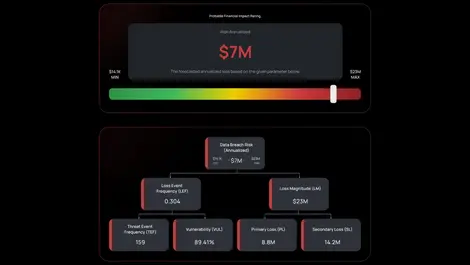
Black Kite adds Open FAIR to quantify third-party risk
Last month
#
ransomware
#
digital transformation
#
supply chain
Black Kite weaves Open FAIR into its platform to automate financial loss estimates in third-party cyber risk assessments and reviews.

UK firms face rising cyberwarfare threat & soaring ransoms
Last month
#
ransomware
#
digital transformation
#
advanced persistent threat protection
UK firms report rising nation-state cyberattacks as average ransomware payouts soar to GBP £7.71 million, outstripping security budgets.

HPE report warns cyberattacks now run like big business
Last month
#
malware
#
firewalls
#
vpns
HPE warns cybercriminals now run attacks like global enterprises, using repeatable workflows, automation and AI to outpace defences.

Custom AI to drive half of cyber incidents by 2028
Last month
#
data protection
#
devops
#
digital transformation
Custom AI apps will drive half of enterprise cyber incident response by 2028, as rushed rollouts outpace security testing and controls.

Global CISO Council launched to steer AI governance
Last month
#
data protection
#
advanced persistent threat protection
#
risk & compliance
EC-Council launches the Global CISO Council to unify AI governance, tech risk oversight and regulatory response for senior security leaders.

AI agents drive surge in cyber threats & extortion
Last month
#
malware
#
data protection
#
ransomware
AI agents are fuelling a new wave of cyber risk, as criminals weaponise automation to speed up ransomware and sharpen extortion tactics.

Tenable appoints Dino DiMarino to drive AI security growth
Last month
#
network infrastructure
#
digital transformation
#
cloud security
Tenable appoints veteran cybersecurity sales leader Dino DiMarino as chief revenue officer to drive global growth in exposure and AI risk.

Midmarket firms overconfident as cyber tools fall short
Last month
#
devops
#
digital transformation
#
cloud security
Midmarket security chiefs brim with confidence yet lack the tools, staff and speed to keep pace with fast-moving cyber threats, survey finds.

Big firms detect cyberattacks but fail to contain them
Last month
#
firewalls
#
ransomware
#
hybrid cloud
Big businesses can spot cyber intrusions but struggle to contain them fast, leaving cloud-era networks exposed to deeper, costlier breaches.

Iran-linked wiper cyber attack cripples Stryker plants
Last month
#
dr
#
iot security
#
mdm
Iran-linked wiper cyber attack cripples Stryker plants, disrupting implant production and locking thousands of staff out of global networks.

Vicarius unveils vIntelligence for continuous validation
Last month
#
endpoint protection
#
advanced persistent threat protection
#
socs
Vicarius launches vIntelligence to continuously validate real-world exploitability and close the loop between detection, remediation and proof.

Quorum Cyber names Joe Strathmann Chief Operating Officer
Last month
#
digital transformation
#
cloud security
#
cx
Quorum Cyber has hired veteran security executive Joe Strathmann as chief operating officer to scale its Microsoft-focused cyber services.

Cyber fears stall UK SMEs' digital plans & AI uptake
Last month
#
data protection
#
digital transformation
#
advanced persistent threat protection
Cyber fears and skills gaps leave UK SMEs torn between bold 2026 digital ambitions and hesitation over AI adoption and data security.

KnowBe4 debuts AI agent for tailored cyber training
Last month
#
socs
#
risk & compliance
#
ai
KnowBe4 unveils AI-powered Custom SAPA agent to tailor cyber awareness tests to each organisation's policies, tools and real-world risks.

Cynomi targets MSPs with new third-party risk push
Last month
#
saas
#
digital transformation
#
cloud security
Cynomi is urging MSPs to tap booming demand for third-party risk services as supply chain attacks surge and compliance rules tighten.