Greenpeace's Cool IT Leaderboard highlights IT firms' climate efforts. Cisco leads with 62 points, doubling its score through emissions-saving tech.
Once the preserve of early adopters, VoIP is now a common form of voice delivery in the New Zealand workplace.
Vodafone has announced a reduction in its prepay calling prices to 49c a minute to call any mobile and 12c to send a text to any mobile phone in New Zealand.
Customers are being warned about aggressive cold calls from telcos following a rise in the number of complaints about unauthorised transfers.
2degrees set to embrace TCF's Emergency Calling Code, joining major NZ telcos in a move urged by ICT Minister after 111 call issues.
Vector is leading the alliance of 19 lines companies and independent fibre companies called the New Zealand Regional Fibre Group (NZRFG).
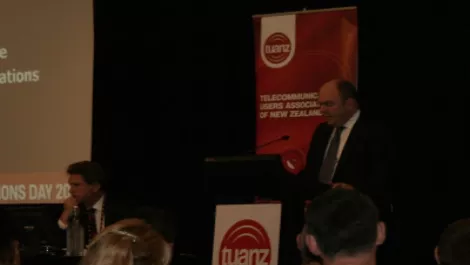
At TUANZ Telecommunications Day, TelstraClear CEO Allan Freeth criticised New Zealand's crab mentality, urging Kiwis to embrace positive change and innovation.
The total fixed line and mobile telecommunications revenue in New Zealand for 2008/09 is estimated by the Commerce Commission to be $5.
At TUANZ Telco Day, top insights reveal support for Chorus by TelstraClear CEO and a push for patient-owned health records by 2014.
Vodafone's $12 offer influences telecom regulation debate, as ComCom rethinks its stance on mobile termination rates, stirring sector responses.
The Commerce Commission has been ordered by the High Court to reconsider the way it calculates the amount telcos must pay to enable a rural telephony service.
Proposed changes to the TUANZ constitution could see a telecommunications industry executive become the chairman of the business user lobby group.
Vodafone NZ's Stanners talks regulation, collaboration, and competition while eyeing the future with tech advancements and challenges.
NZ commits to a £1.5 billion Ultra Fast Broadband network, boosting access for 75% of homes, schools and workplaces within 10 years.
As Telecom relinquishes NZ's numbers, the debate intensifies on who should manage them: telcos, regulators, or an independent body?.
Australia and New Zealand are leading the way in the return of government involvement in telecoms, as they invest in their own networks.
New Zealanders are only fooling themselves if they think our geographic isolation and small population make us less attractive to cybercriminals.
RSA appoints Julian Garreffa as Information and Security Specialist to spearhead growth and enhance market presence in New Zealand.
The government favours fibre in the Rural Broadband Initiative (RBI) with a USD $300 million investment to boost connectivity in rural schools.
In a surprising turn, TelstraClear backs Chorus for the government's Ultra Fast Broadband network bid, urging collaboration over competition.