Threat Landscape stories
Ageing defence networks could gain a faster layer of protection as the Sheffield firm targets legacy systems vulnerable to AI and quantum threats.
The new product aims to spot and contain malicious AI-agent activity in clouds as firms brace for faster, harder-to-detect attacks.
The deal gives A-LIGN customers direct access to penetration testing and red teaming as firms seek fewer vendors for cyber compliance and defence.
As AI coding agents speed up development, JFrog is adding controls meant to keep governance, compliance and patching from lagging.
The hire signals rising pressure on security teams as AI expands attack surfaces across hybrid cloud systems and customer data flows.
Organisations hit by ransomware will gain a secure, auditable recovery environment as HCLTech expands VaultNXT with Cohesity's clean room service.
ReliaQuest says a single operator may have used a commercial AI coding agent to build malware, a console and update pipeline across 324 hosts.
Most firms have not meaningfully upgraded authentication for years, despite rising identity-breach risks and an estimated USD $4.4 million hit per breach.
Industrial operators faced sustained pressure in July, as ransomware attacks hit 894 cases and AI-assisted tactics began to reshape threats.
Top cyber teams are adopting AI agents in greater numbers, even as the latest benchmark shows faster challenge solves and fuller board completion.
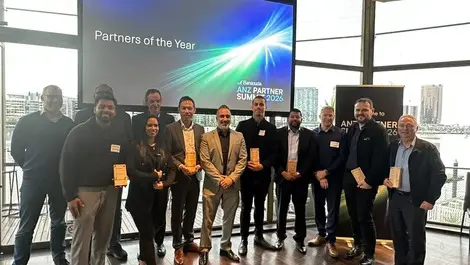
Regional channel partners in Australia and New Zealand are gaining more support as Barracuda steps up tools, training and marketing to win share.
Australian and New Zealand businesses face greater pressure to prove cyber controls work as the firms back continuous testing over periodic reviews.
Patching is urgent for Cudy WR3000 rev 2.0 routers, as public code shows how two flaws can let attackers gain root command execution.
Spoofed emails could still reach public servants and citizens, as 50% of more than 200 New Zealand agencies have not met the DMARC standard.
The tie-up gives enterprise and government clients deeper testing coverage as AI reshapes offensive security and demand for specialists grows.
Security teams can now spot flaws under active attack sooner, as Cloudflare's new service adds temporary edge protections and AI patch suggestions.
As firms spread across cloud and on-premises systems, a combined security and compliance model is becoming harder to ignore for auditors and boards.
Businesses facing faster AI-driven attacks can now use Visa's updated framework and advisory services to cut vulnerability fixes from weeks to hours.
Rising use of AI coding tools is widening software supply-chain risks for businesses across the Middle East, Türkiye and Africa.
The new tools aim to cut the gap between finding a flaw and fixing it from weeks to hours as attacks accelerate.