

.webp)
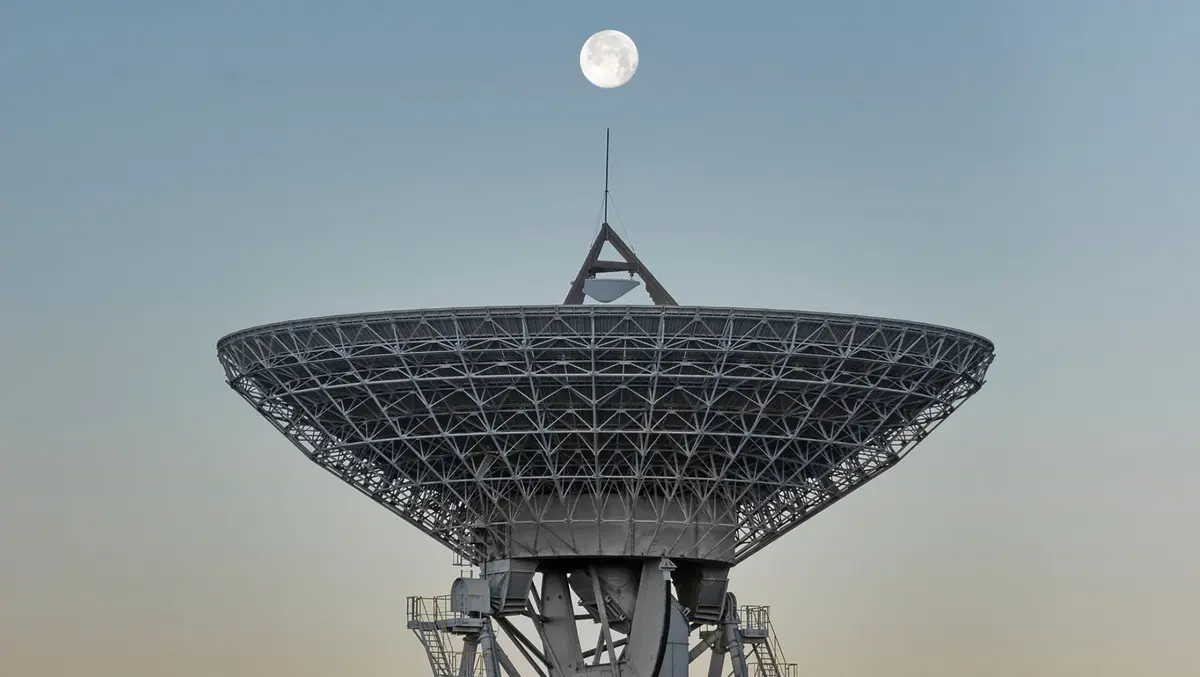
Goonhilly Earth Station will passively track NASA's Orion spacecraft during the Artemis II mission, extending the Cornwall site's involvement in the Artemis programme after supporting Artemis I.
The station previously provided communications and tracking support for the uncrewed Artemis I mission in 2022 using its 32-metre GHY-6 antenna. It tracked Orion and communicated with six CubeSats deployed during the flight.
For Artemis II, the focus will shift to the crewed Orion spacecraft as it travels beyond low Earth orbit, performs a lunar flyby and returns to Earth. The mission is expected to mark the first time humans have travelled around the Moon in more than 50 years.
On Artemis II, Goonhilly's role will be passive tracking rather than the active communications work it carried out on Artemis I. Its participation in Orion tracking is also being undertaken on a voluntary basis.
The announcement places a British ground station among a small group of commercial operators equipped to support deep-space communications. It also gives the UK a visible support role in a US-led crewed lunar mission, as government and industry seek a larger place in international space programmes.
Broader work
Alongside Artemis II, Goonhilly is working with the UK Space Agency and NASA on possible downlink arrangements for near-real-time space weather data from NASA's Interstellar Mapping and Acceleration Probe, or IMAP. The observatory is positioned at the Sun-Earth Lagrange Point 1, a location used to monitor solar activity and conditions in the solar wind.
The work centres on IMAP's I-ALIRT system, which is intended to provide solar wind and space weather observations relevant to NASA's Moon to Mars framework. The mission also includes a UK scientific contribution through a magnetometer designed and built by Imperial College London.
The IMAP support activity is being funded by the UK Space Agency and undertaken with NASA, subject to final agency approvals. If completed, the arrangement would add a second strand of NASA-related work for the Cornwall facility beyond lunar mission support.
UK role
Repeated involvement in Artemis missions is raising Goonhilly's profile in work beyond Earth orbit. The site holds a notable place in British space communications history because it helped broadcast the Apollo 11 Moon landing in 1969. Since then, it has expanded into tracking and communications services for missions to the Moon, Mars and deeper space.
The latest Artemis assignment also reflects a broader pattern in which UK organisations contribute specialist infrastructure or instruments rather than launch systems or crew transport. In this case, that contribution comes through ground communications support and the IMAP magnetometer built by a British academic institution.
Matthew Cosby, CTO of Goonhilly Earth Station, said the Artemis II role and the IMAP work showed how the company wants to position itself in future exploration programmes. "Artemis II marks a significant milestone in humanity's return to the Moon, and we're proud that the capabilities developed here in Cornwall are contributing to that mission. From our site, we will support tracking of the Orion spacecraft, showcasing our readiness for future crewed Artemis missions. At the same time, we are positioning the UK to play a key role in NASA's longer-term Moon-to-Mars exploration strategy," he said.
Government ministers also highlighted the site's heritage and the visibility that comes with supporting a high-profile lunar mission. The UK has backed efforts to expand domestic space infrastructure, including satellite services, launch activities and research links with major international agencies.
Liz Lloyd, UK Space Minister, linked the announcement to the station's earlier role in lunar broadcasting. "From broadcasting the Apollo 11 Moon landing to the world in 1969, to now supporting NASA's return to the Moon with Artemis II, Goonhilly's rich heritage in space communication continues to inspire. It's fantastic to see Cornwall once again at the heart of a truly historic moment in human spaceflight. This partnership with NASA shows what British expertise and innovation can achieve on the world stage, while creating opportunities for skilled jobs and growth right here in the UK," she said.