

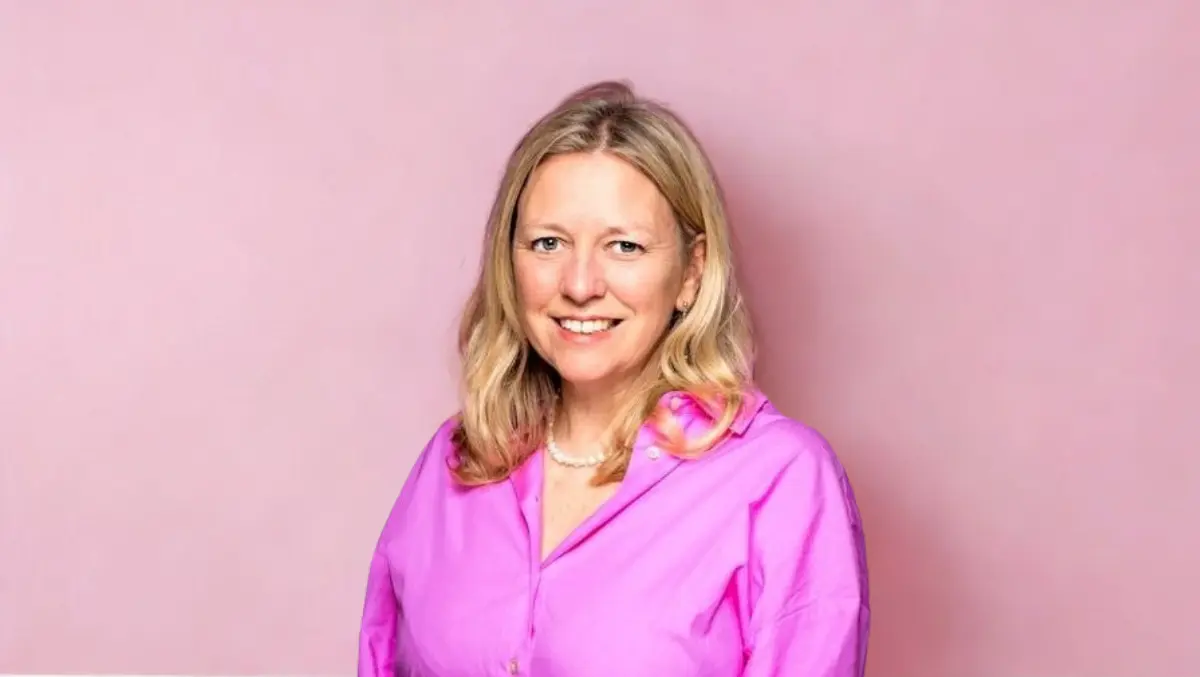
'I have often been the only woman in the room.' Catherine Birkett on 25 years in tech
Thu, 5th Mar 2026
The tech industry has been my home for nearly 25 years. I started out in the telecoms/internet/cloud sector – in the early 2000s, this was considered tech. Then, for the last seven years, I've worked in financial technology (Fintech). Alongside this, I have held board roles within a data analytics business and most recently EdTech, at Twinkl.
Times have changed. My roles have evolved; I have gained experience and insight. Yet, now looking back at the last twenty-five years, it's interesting to consider what has stayed the same. Throughout my career, I have often been either the only woman in the room or, at most, one of two. Disappointingly, in 2026, this is still the case. It's true that there are now more tech businesses with at least one female executive – whereas in 2004 I was a real rarity. However, the fact we are still only talking about one woman per business shows just how far we have to go.
My biological sex is not the only thing that makes me a rarity in these spaces. I grew up in a northern, working-class ex-mining village, was educated in a comprehensive school, and to this day still haven't lost my northern accent. In numerous instances, I have been more conscious of this than my gender. I remained unfazed, however. My mathematical background allowed me to develop a real fascination with the tech world; both in terms of how businesses work and also how the technology itself works. I have found tech to be a wonderful space to work as a woman. The less bureaucratic, hierarchical environments within tech businesses provide opportunities to thrive in more junior positions, and the flexible working environments can prove most helpful when it comes to combining parenthood with careers.
That being said, senior levels are male-dominated, even in tech businesses. Some argue this is because tech is less attractive to women as an industry, but this simply isn't true. When you look at the ratio of men to women further down the hierarchy, the workforce is much closer to being equal. Personally, I think it's much more likely that the industry's proximity to the male-dominated worlds of venture capital and private equity – many tech companies are financed this way – is a factor.
Diversity is not a buzzword. It's a crucial tactic for avoiding mistakes. No one is perfect and no one is free of blind spots. Having diversity around a board table means you immediately have access to a greater range of perspectives and, therefore, experience. Not everyone on a team should come from the same background. It's far more helpful to have a group that balances out each other's strengths and weaknesses. Personally, I thrive when looking at 'big picture' financial strategies, so I build teams around me that manage the smaller details.
As the Chair of the Audit and Risk Committee at Twinkl, my responsibilities include oversight of internal controls and risk management, areas that are increasingly important to the company as it expands its range of products and services internationally. It's my job to work out which risks are worth taking and which aren't. A lack of diversity, in 2026, is not a risk worth taking. If you build a capable team to support you, from people that are not like you, who see things different to you, then you are building an extra layer of security. Challenge your recruitment processes and your board composition to actively seek out difference – in gender, in background, and in perspective. True security comes from having a full range of experience at the decision-making table. I hope, when we come to look back in another twenty-five years, we see that change; not just in terms of gender, but with regards to race and socio-economic background too.