

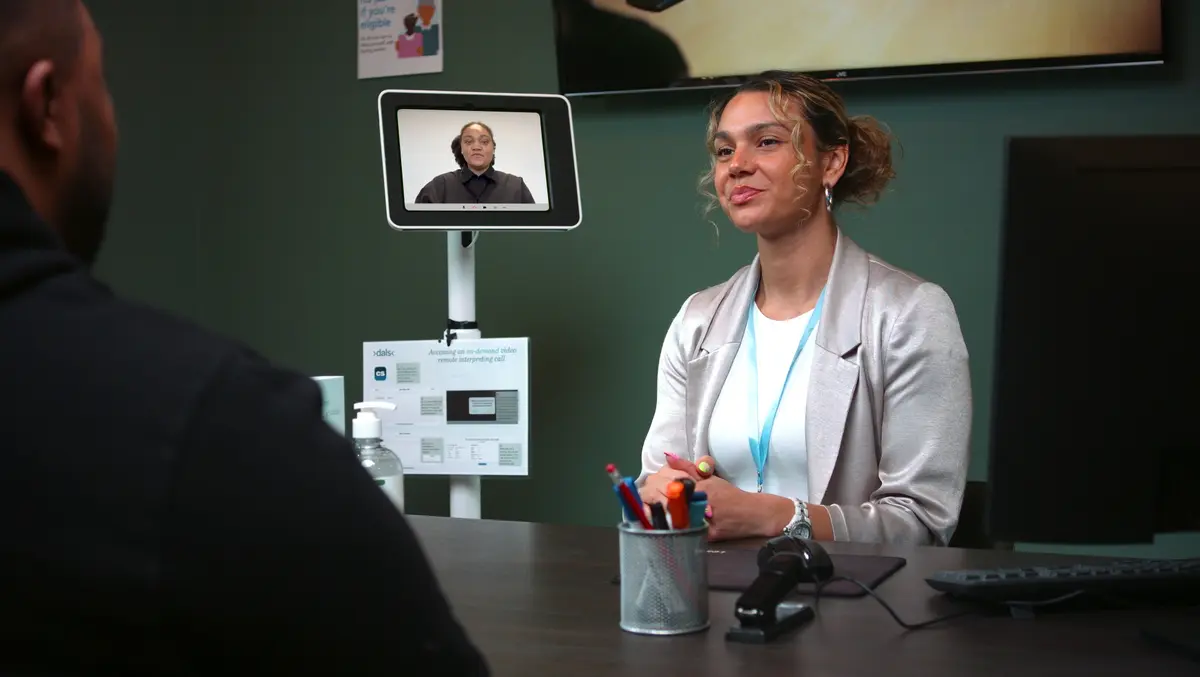
Manchester NHS trust passes 50,000 minutes of video interpreting
Thu, 29th Oct 2026 (Today)
Manchester University NHS Foundation Trust has passed 50,000 minutes of video interpreting across its services, following a trust-wide rollout of an on-demand system developed with language services provider Dals.
The service was introduced after a three-month pilot in selected clinical areas. During that phase, staff completed 958 interpreting sessions, using more than 18,000 minutes of interpretation.
Since the pilot was expanded, a further 33,000 minutes have been delivered across 46 languages. The trust said the average connection time is 22 seconds, giving clinical teams round-the-clock access to interpreters through tablets and desktop devices.
MFT is the UK's largest NHS trust, running 10 hospitals and community services in Manchester. It had previously relied on face-to-face and telephone interpreting, both of which could require advance booking or cause delays in urgent situations.
Maternity demand
Maternity services were the biggest users of the video system during the trial and remain the largest source of demand. Out-of-hours use was particularly high in the delivery unit at Saint Mary's Hospital, according to the trust.
Staff used mobile tablets in delivery rooms, including during active labour, emergency caesarean sections, antenatal triage and postnatal care. The trust said video access solved practical problems that can arise with telephone interpreting in labour wards, where patients may be unable to hold a handset and speakerphone use can be difficult in busy rooms.
Before the service was introduced, staff sometimes relied on workarounds, including apps or family members, to communicate in urgent cases. The trust said the video option reduced those situations by making interpreters available within seconds.
Demand has centred on Middle Eastern and South Asian languages, with Polish and Romanian also frequently requested. The trust said languages that had historically been difficult to source in person showed marked improvement under the video model, including Vietnamese, where successful requests rose from 66% to 100%.
One deaf service user told the trust that immediate access to a British Sign Language interpreter by video call "made the hospital feel so much more accessible" than on earlier visits.
Pilot findings
Daniel Blackburn, programme manager at MFT's Interpretation and Translation Service, said maternity teams quickly became the heaviest users during the trial.
"We feel the pilot has been a real success within maternity services. During the trial, we had one device in a delivery unit and another in an antenatal clinic. The delivery unit quickly became - and remains today - the highest user of the on-demand video interpreting service. Having on-demand and quick access to interpreters has proven incredibly necessary in this setting where babies can come at any time of the day or night. Data throughout our pilot showed that more calls were made from the delivery unit outside of 'office hours' than within. We could also see how languages that were typically difficult to source face to face were being accessed via video with very little wait time. This allowed families and patients to receive support in a way that they may not have been able to without this service," Blackburn said.
The trust also described one case involving a Vietnamese patient who arrived in labour after a previous traumatic birth in which she had not had a professional interpreter. This time, staff used the on-demand video service, allowing the family to follow what was happening throughout the birth.
Blackburn said staff had identified a practical difference between telephone and video support in labour settings.
"While telephone interpreting has previously supported this type of communication, the feedback we've received highlights the added value of video - being able to see each other. For example, colleagues in the delivery unit shared how beneficial it was for interpreters to recognise visually when a patient is experiencing a contraction, rather than assume a pause in speech was due to a technical issue on the phone line. We are incredibly proud to be expanding language support for women during childbirth, and for patients across the other areas involved in the pilot. This has enabled us to enhance patient experience and help ensure patients feel informed, understood and respected, regardless of their language," Blackburn said.
Wider use
Although maternity accounted for the largest share of activity, clinicians and patients in other departments also responded positively, the trust said. These included A&E, outpatient clinics, surgical wards, cardiology teams and community services.
Dals, based in Manchester, said it provides access to more than 500 languages and has more than 10,000 interpreters on its books, including support for British Sign Language and harder-to-source dialects such as Oromo, Tigrinya, Kurdish Sorani and Vietnamese.
Clare Power, key account manager at Dals, said: "Working in partnership with MFT, we've seen a significant improvement in patient experience through video-on-demand interpreting. The service provides immediate access to more than 500 languages and allows clinical teams to support patients quickly and safely, without relying on workarounds or waiting for face-to-face availability. It also offers a more efficient approach for many appointments where on-demand support is more clinically appropriate, helping services run more smoothly while reducing delays to patient care and the wider costs associated with missed or postponed appointments."