

Panasonic launches rugged TOUGHBOOK G3 for field workers
Thu, 1st Oct 2026
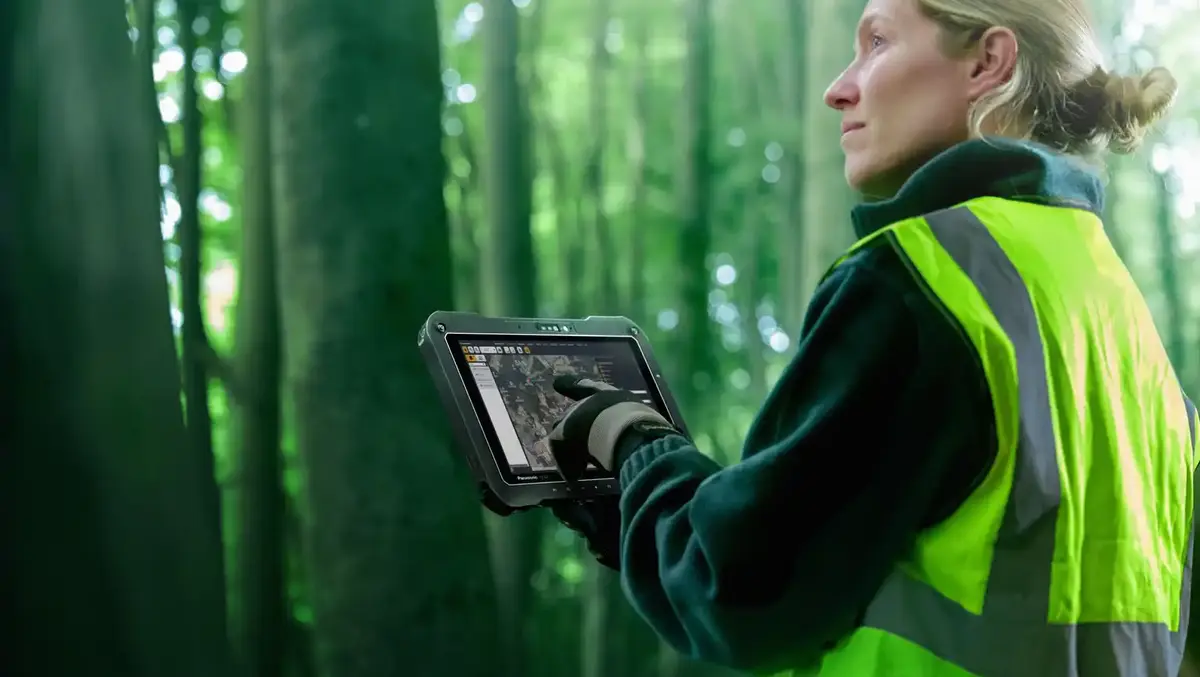
Panasonic has launched the TOUGHBOOK G3 rugged tablet for field workers in sectors including defence, emergency services, utilities and logistics.
The G3 succeeds earlier models in Panasonic's rugged tablet line, with updates focused on battery life, modular hardware and on-device AI processing. Its new battery pack design delivers 39% longer battery life than the G2mk3 under MobileMark 30 testing.
Users can choose from three battery options rated for 8.5, 17 or 24 hours per charge. The largest, a 99Wh battery, is the biggest fitted to a TOUGHBOOK device, according to Panasonic.
The tablet also supports hot-swappable batteries. An optional bridge battery lets users change batteries without shutting down the device, a feature aimed at staff working long shifts away from fixed charging points.
Field design
Panasonic built the G3 around a 10.1-inch display and a form factor intended for use on foot, in vehicles and in confined workspaces. It can be used as a standalone tablet, fitted with a detachable keyboard or deployed in vehicle docks, including emergency service fleets and warehouse forklift trucks.
The design is intended to reduce fatigue during prolonged use. A handle attachment is available through the G3's ergo grip setup, and the tablet can be operated by touch, with gloves or with a pen.
Modularity is a key part of the update. User-replaceable expansion modules support options including smart cards, fingerprint readers and barcode readers, while the solid-state drive can be removed quickly. Panasonic has also added five programmable buttons, allowing up to 10 shortcut functions through short-press and long-press actions.
Those options reflect demand from organisations deploying a single hardware family across several frontline roles. Emergency crews, warehouse staff, surveyors and utility engineers often need different authentication methods, peripherals and data capture tools while working within the same IT estate.
AI and software
The G3 uses Intel Core Ultra Series 3 processors and, in higher configurations, dual-channel RAM. Panasonic positions it as an AI PC running Windows 11 Pro, designed to collect, store and analyse data at the edge without relying on a constant cloud connection.
That focus on local processing is aimed at settings where connectivity is intermittent or where data needs to remain closer to the point of capture. Field operations in utilities, roadside assistance, manufacturing sites and tactical environments often face those constraints.
The TOUGHBOOK range is also certified for use with Red Hat Enterprise Linux and Red Hat Device Edge, giving customers another operating environment for deployments that rely on Linux-based edge systems rather than Windows alone.
Connectivity and durability
For communications, the tablet includes Wi-Fi 7 and optional 4G or standalone 5G. A dedicated LAN port supports fixed connections when users return to base or work at sites where wired network access is preferred.
Panasonic said private and standalone 5G support is relevant for remote field work that requires immediate access to applications and data. In sectors such as utilities and roadside support, network availability remains a practical issue for mobile teams, especially outside urban areas.
The device is designed to meet IP66 standards for dust and water ingress, although it is currently certified to IP65. Panasonic also said the G3 has been vibration-tested to MIL-STD 810H specifications, can survive drops of 180cm and can operate in temperatures from -29°C to 63°C.
Security features include Windows 11 Secured-core PC protections and Panasonic's TOUGHBOOK Guard, an embedded firmware-based security option that checks hardware configuration against an approved baseline before the operating system loads. Panasonic said this is intended to ensure that only authorised components remain active.
Another practical element is backwards compatibility with earlier accessories and peripherals, which may help customers upgrade fleets without replacing every dock, mount and add-on already in service.
The launch comes as device makers seek to position rugged hardware as part of a wider edge computing strategy rather than only as durable equipment for harsh environments. Buyers in transport, public services, industrial settings and defence increasingly want longer battery life, flexible connectivity and local data processing in the same device.
Panasonic Group reported consolidated net sales of EUR €46.0 billion for the year ended March 31, 2026.
"The G3 is designed to move at the pace of the field worker. It combines true mobility, intuitive ergonomics and the required durability that changes what's possible in a shift. Its battery flexibility removes one of the biggest constraints on frontline productivity, making it a genuine differentiator for mobile teams," said Dirk Weigelt, Senior Product and Solutions Manager, Panasonic TOUGHBOOK.