

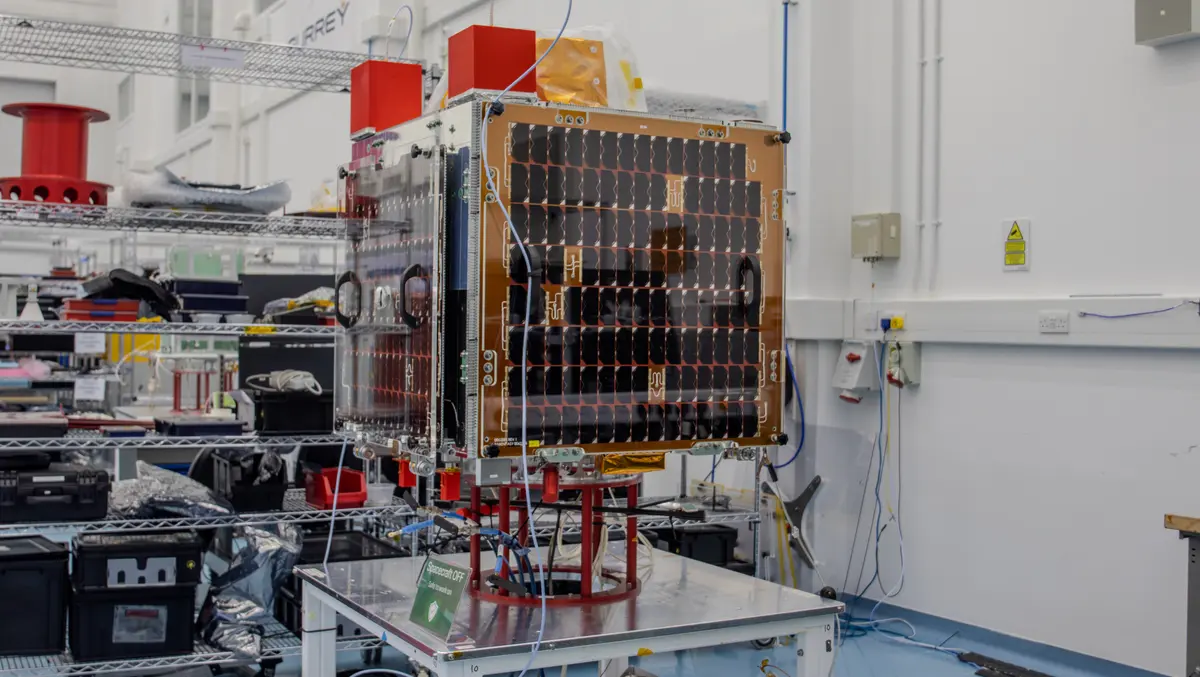
SatVu readies HotSat-2 for SpaceX rideshare launch
Thu, 26th Mar 2026.webp)
SatVu says HotSat-2 has completed launch integration for SpaceX's Transporter-16 rideshare mission. The satellite is the second spacecraft in the British company's HotSat constellation.
It is ready to fly from Vandenberg Space Force Base in California as SatVu rebuilds its thermal Earth observation network.
HotSat-2 carries mid-wave infrared sensors designed to capture heat signatures from activity on the ground, adding a thermal layer to Earth observation for national security, economic intelligence and climate resilience work.
SatVu distinguishes its system from conventional optical and radar satellites. While those platforms show what is present on the ground, thermal sensing can indicate what is operating and how activity levels change over time.
The launch marks another step for a UK space business seeking a niche in the crowded Earth observation market. Thermal imagery has attracted interest from governments and commercial users looking to monitor industrial sites, energy infrastructure and environmental conditions day and night.
SatVu says its data can monitor assets including blast furnaces, kilns and oil and gas operations. It also points to uses in checking power generation, tracking carbon capture projects and identifying risks such as leaks, equipment faults and compliance issues.
Anthony Baker, Co-Founder and Chief Executive Officer of SatVu, said "By returning to orbit, we are restoring a critical capability for our partners and customers. High-resolution thermal data is no longer a 'nice-to-have'; it is a fundamental requirement to complete geographical intelligence assessments. HotSat-2 is designed to measure what's operating, what's idle and how these patterns change over time, whether it is day or night. With the satellite now integrated for launch, we are moving closer to delivering a dependable new intelligence layer from orbit."
Constellation plan
According to SatVu, HotSat-2 will provide the technical and operational foundation for the next phase of the constellation, with HotSat-3 already in production.
A larger network would allow more frequent passes over the same locations and faster access to thermal data. That matters for customers seeking repeated monitoring of industrial output, energy flows or signs of disruption across widely dispersed sites.
SatVu has said its future constellation is intended to provide as many as 20 daily revisits. It also cites a thermal resolution of 3.5 metres.
The company operates in a segment of the space market where investors and governments have backed specialist satellite operators offering imagery, radio-frequency monitoring and other forms of geospatial intelligence. For UK space companies, commercial traction and reliable access to launch remain important tests as they move from demonstration to regular service.
The announcement also drew support from government. Liz Lloyd, UK Space Minister, said "SatVu is a shining example of British innovation at its best and proof that government investment in our space sector pays dividends. The ability to monitor thermal activity from orbit, around the clock, opens up remarkable possibilities for national security, climate resilience and market intelligence. This is exactly the kind of bold, ambitious technology Britain is leading the world on."
Based in London, SatVu focuses on thermal intelligence from orbit rather than standard visual imagery. Its pitch is that heat patterns can reveal activity levels at facilities that may otherwise appear unchanged in optical images.
That approach could be relevant to defence analysts, commodities traders, insurers and companies tracking industrial emissions. Thermal data can also be used to observe facilities at night or when visible imagery alone does not show whether equipment is running or idle.
HotSat-2 is set to become the company's latest attempt to establish that service in orbit, with HotSat-3 forming the next stage of the build-out already under way.