Meteorology stories
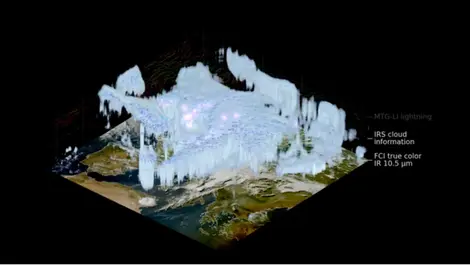
Europe's first geostationary infrared sounder is now feeding weather models, giving forecasters 30-minute atmospheric updates to spot severe storms sooner.
A £9 billion exposure to major space weather events is prompting earlier warnings for flights, GPS users and the electricity grid.
Businesses and researchers can now trial photonic quantum hardware by the second, as OVHcloud widens its pay-as-you-go platform with a second machine.
Spain's weather forecasts will be backed by faster computing and lower energy use as AEMET upgrades systems under a four-year deal.
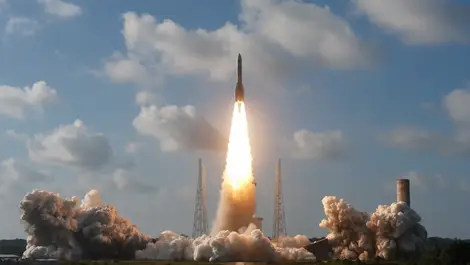
Faster storm and wildfire warnings are now closer as the full Meteosat Third Generation weather constellation completes its first orbital set-up.
Its systems now account for more than 11.4 exaflops of combined performance, strengthening the vendor's grip on the supercomputing elite.
Users can now see how stale each radar reading is at specific map points, exposing delays that often run eight to 15 minutes.
Asia-Pacific users can now test quantum workloads remotely on a 12-qubit photonic machine, billed by the second with no commitment.
Businesses in Canada can now test quantum algorithms on a 12-qubit photonic machine through OVHcloud’s pay-as-you-go platform.
FTC Solar has launched an Automated Hail Stow Solution to protect PV panels from hail damage, leveraging tech and meteorological data for dynamic adjustments.
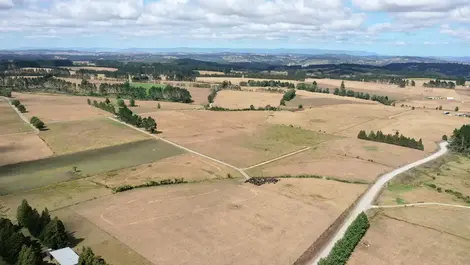
Drier spring weather is now the most likely outcome for Northland as a strengthening El Niño starts to bite, the regional council says.
South Island warmth and a June heat spike drove New Zealand's winter to 9.7C, with 27 places logging record seasonal temperatures.
Strong winds, dry spells and flooding are more likely across New Zealand as the Pacific pattern strengthens to very strong in September.
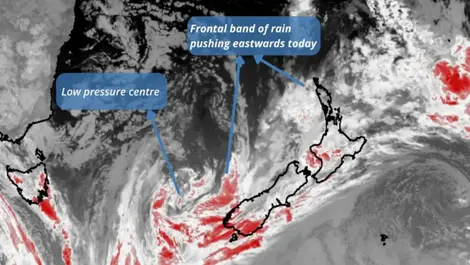
Heavy falls may trigger warnings as a warm, moisture-laden front sweeps across the upper North Island and Westland.
The move could speed forecasting and model updates as the US agency shifts a mission-critical system from on-site supercomputers to the public cloud.
As provinces brace for a severe fire season, AWS is touting AI systems that can speed detection, protect crews and improve evacuation alerts.
EWS to open Canadian hub for satellite-first remote monitoring, backing the move with a multi-million CAD $ investment and local hires.
Sony launches Climate Station, a free PlayStation 5 and VR2 app using interactive data to educate users on climate change and future scenarios.
The partnership aims to improve monsoon and extreme-weather forecasts, with researchers also targeting better ocean monitoring and climate projections.
AccuWeather has acquired TOA Systems' lightning network, enhancing global lightning detection capabilities and aiming to improve safety and preparedness.