

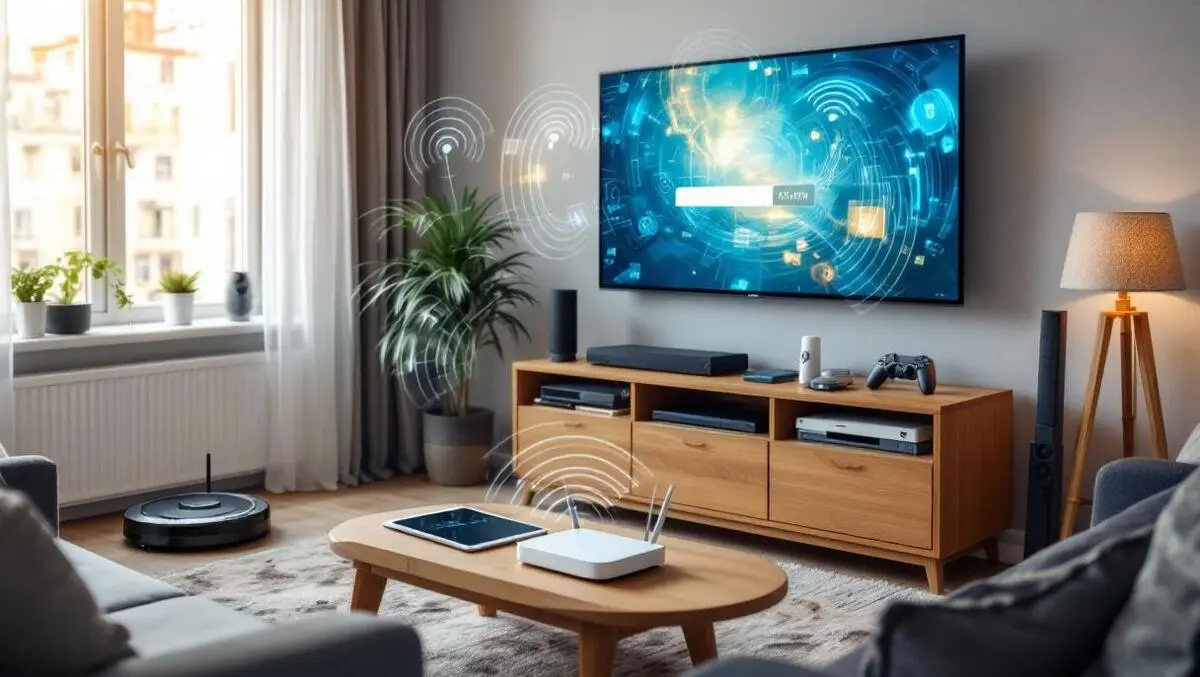

Smart TVs, video doorbells and smart speakers are among a group of "phantom devices" that can slow home WiFi during peak periods, according to research by broadband comparison service Uswitch.
The findings come as school half-term holidays typically push more families online at the same time. In a survey commissioned by Uswitch, 77% of parents said their family's time online increases during school holidays. Children's average daily home broadband use rose to 2.4 hours during holidays from 1.9 hours in term time - a 26% increase.
The research focuses on smart devices that stay connected even when they are not being used. They can continue to exchange data with a home router, such as checking for software updates and sending status information. Devices that record and upload video can place a sustained load on a household connection.
In the survey sample, 82% of UK households reported having a smart TV. Video doorbells and smart speakers each appeared in 39% of homes.
Always connected
Home networks are also becoming more crowded. The average household now has 16 connected devices, and one in 10 homes reported having 30 or more gadgets competing for bandwidth.
The mix extends well beyond phones and laptops. Uswitch's top 10 "phantom devices" include smart thermostats, smart plugs, smart washing machines, smart smoke alarms, smart fridges, robot vacuums and baby monitors, alongside common devices such as smart TVs and smart speakers.
Many are designed to remain online as part of normal operation. Smart thermostats and smoke alarms can relay sensor data. Smart plugs can report energy use and receive remote commands. Robot vacuums can sync maps and logs. Baby monitors and doorbells can upload video and send alerts.
The survey also found that 38% of UK adults were unaware some devices can use broadband even when they are not actively being used. Uswitch said this equates to more than 20 million people, based on an adult population of 55 million.
WiFi frustrations
Dissatisfaction with home broadband performance also appeared widespread. Three in five respondents said they had felt frustrated with their WiFi speeds in the past three months, with households reporting frustration about four times a month on average.
Half-term usage patterns can intensify competition for bandwidth within the home. Parents said families were most likely to use smart TVs more during holidays (44%). Gaming devices such as consoles rose to 40%, as did tablets.
While video streaming and gaming often dominate attention, background traffic from smart home products can run in parallel. Uswitch highlighted upload-heavy devices as a particular factor: video doorbells and baby monitors can send large files to cloud services when motion is detected or when continuous monitoring is enabled.
Max Beckett, Uswitch broadband expert, said households often underestimate the impact of background traffic.
"Unused gadgets and sensors are constantly talking to your router in the background, which can clog up your connection and cause frustrating buffering when you are trying to watch a movie or play a game."
He linked the issue to the holiday spike in demand across many households.
"As half term sees a surge in demand across UK households, it is important to know that WiFi struggles are not just caused by too many people being online. Some devices take up bandwidth even when you haven't touched them for days."
Managing devices
Uswitch advises households to review what is connected to their network and disconnect devices that are not in use, such as old tablets, redundant smart speakers or smart plugs left powered on.
"Smart devices are becoming part of our daily lives, but it is easy to forget about old tablets, smart speakers, or smart plugs that are still plugged in and connected to your network," Beckett said.
One step is to power down devices that are not needed day to day. Another is to remove unused products from the WiFi network entirely, so they do not keep reconnecting in the background.
Beckett also said broadband technology can affect how well a household handles high simultaneous demand.
"A full fibre broadband connection is the safest way to avoid buffering, but simple steps like managing your connected devices and limiting how many people stream high-definition video at the same time can make a huge difference."
As smart home adoption grows and the number of connected devices per household rises, providers and comparison services are likely to keep promoting device-management advice and package selection as families face more frequent peaks in home network demand.